There are many ways to prepare for a test or to do an assignment. Good study habits are a must for anyone who wishes to achieve great success in their courses.
1. Create an appropriate study environment. You will need limited noise, a lot of sunlight, a tidy surface, and comfortable furniture. Find a quiet place to study where you won't be bothered. This is very important and should be given great care in doing.
2. Get everything you need before you sit down to study. Pencils, pens, notebooks, college ruled paper, your laptop, textbooks, etc.
3. Develop a schedule. All students should keep a schedule of classes, assignments and other key dates. As part of that schedule, they should set aside specific time for studying and project work. That way, they're less likely to find themselves scrambling to complete a project at the last minute or cramming the night before a big test. The schedule should also set aside time for non-school activities like sports. In fact, the more comprehensive the schedule, the more efficient most students will be in completing their schoolwork.
4. Develop a calm attitude. Be calm and patient with yourself. Nobody learns anything straight away.
5. Take notes in any classes that you have. You can even take notes at work. It may be easier to use abbreviations for common words, only record important information (and/or key words), use clear headers to organize information and use pictures/diagrams to demonstrate. Highlight or underline key points in your material.
6. Start with the homework that is hardest to you. For example, if you're taking chemistry, math, English, and Spanish. Start with Chemistry and end with English. If you start with the hardest subject, your brain will be fresh.
7. Avoid distractions. If you have family members that distract you, politely ask them to leave so you can continue with your assignments. If you have kids, this might not be possible. Make sure the TV and radio are off. If you need background noise, classical music might be of interest.
8. Take frequent breaks. Go for a walk, ride your bike, or be with family. When you take frequent breaks, you find that you aren't boggled with the stress of homework and you can't wait to get back to your assignments later.
9. Develop effective memorization techniques - You can use lists when having to memorize several things eg. (formulae). Flash cards are good for memorizing large amounts of grouped information.
10. Develop critical reading skills. As students move into higher grades, they're assigned larger and more complex reading assignments. Poor reading skills or an inability to read for important information will make these assignments a burden and undermine overall academic success. Students need to deliberately learn to read for key information. If reading skills are weak, it's important for the student to seek help improving them; otherwise performance in many subjects would be impacted.
11. Focus on the areas that require the most attention. Study things more if you have a hard time doing them.
12. Improve test-taking strategies. A poor test result doesn't always mean that the student doesn't have a good grasp of the academic material or skill gaps. It's possible that the student understands the material, but doesn't take tests well. An effective test-taking strategy includes: learning how to prioritize material when studying for a test; preparing for a test over a number of days and not just the night before; coping with stress during the test; and managing time during a test so that all sections or areas are completed.
13. Develop a study group. This way you can quiz each other and learn things from each other
.
14. Ask questions to yourself. Asking questions should lead to emphasis on the what, why, how, when, who and where of study content. Ask yourself questions while you read or study. Answering them will help to make sense of the material, and aid you in remembering it, because the process will make an impression on you. Those things that make impressions are more meaningful, and therefore more easily remembered.
15. Make sure you get enough sleep. Staying up late studying is not a good idea. Lack of sleep prevents you from concentrating and reduces your ability to remember what you have learnt
Tuesday, April 23, 2013

By Gemma Sanz
Legend and tradition
The legend of Sant Jordi and the dragon

Jaume Ferrer II (15th C.). Altarpiece. Catalan School. Lleida City Council. Photo: AISA.
The exploits of Sant Jordi and the Dragon became popular throughout Europe around the 9th century under the name of "Golden legend" and were compiled by the archbishop of Genoa, Iacopo da Varazze, in 1264, in the book 'Legenda sanctorum '. In this version, however, the exploits took place in Libya.
The most popular legend in Catalonia about Sant Jordi tells that at Montblanc, in Conca de Barberà, there was a terrible dragon which viciously attacked men and beasts. To pacify it, lots were drawn and a person was chosen to be given as a sacrifice to the monster. One day, the misfortune fell on the king's daughter, who would have died in the beast's claws if it had not been for the arrival of a handsome knight who challenged the dragon and killed it.
This same legend, although with slight variations, is told as a popular legend in England, Portugal and Greece.
Monday, April 22, 2013
Lego school promises the building blocks to successful learning
Danish firm brings its research into child development as well as cash to new Billund venture centred on inquiry-based education

The International School of Billund will combine the international baccalaureate with the Danish school system and an emphasis on creativity and play. Photograph: Jim Watson/AFP/Getty Images
For many children, it's the ultimate fantasy. For a few, it's about to become a reality. In August a newly refurbished building in Billund,Denmark, will open its doors to become the first ever "Lego school".
The fee-paying establishment is the brainchild of the toy manufacturer's billionaire owner, Kjeld Kirk Kristiansen, who hopes the school will help put the town in rural Jutland – a place Copenhageners refer to as Hicksville – on the map as the Capital of Children.
The International School of Billund will combine the international baccalaureate (IB) with the Danish school system and Lego's emphasis on creativity and play. Centred around "inquiry-based learning", the idea is that children are more motivated when they generate their own questions. As one prospective parent of the new school put it: "In the UK you're taught how to pass exams. In Scandinavia you're taught how to think."
The school's champions hope that by combining this free and easy approach to learning with Lego's research into child development and the international baccalaureate, pupils will have the tools to both "think" and "do" in their chosen careers.
The headteacher is British physicist-turned-international-school-tsar Richard Matthews, a seasoned head, having led schools all over the world from Botswana to Grimsby. As one of the few men in Denmark to wear a tie, he is referred to by some prospective parents as "Tie Man".
"Allowing time for creativity, play and getting into a state of flow is at the centre of Lego's philosophy and we'll be experimenting with this and other ideas in the timetabling," he said. "But we also have a responsibility — the children's education comes first and sometimes the old methods will be the best."
The UK debate about child-centred learning was revived on Monday when Liz Truss, the early years minister, complained to the Daily Mail that in nurseries she had "seen too many chaotic settings, where children are running around" in an environment with "no sense of purpose".
 Billund, Denmark, which Lego's owner wants to turn into the 'Capital of Children'. Photograph: Graphic
The new school in Billund is just one of a long line of projects in a town of 6,000 people sponsored by the Lego family. The family has also paid for an airport – the second largest in Denmark – and worked with the council to construct a church, community facilities, a library and a theatre.
 Lego owner Kjeld Kirk Kristiansen. Photograph: AFP/Getty Images
The Kirk Kristiansens are the most famous dynasty in the country and Kjeld is the richest man in Denmark, but he still chooses to live and work in Billund. As well as supporting the drive to make his hometown the Capital of Children, he is chairman of the board of theLego Foundation, an organisation funding research into child development and the psychology of play.
There has already been plenty of interest from parents, although some have expressed fears about the experimental nature of the venture. "I worry about using my children as guinea pigs," said one parent. "They're trying to do something quite different, so there are bound to be teething problems."
The school will open for three- to seven-year-olds in August, with pupils up to the 16 invited to join from 2015. The intake will be 50% Danish and 50% international.
The school will be subsidised, with the government paying two-thirds of fees and parents covering the remaining third, 3,000 Danish kroner a month (£344).
On a tour of the plot where the school will be, Matthews describes bike routes he intends to create, playgrounds to be built, a hexagonal music studio to be developed and the "Lego Lab" ("the amount of Lego we can have is obviously not an issue", he said). Kindergarten will be "one big adventure," he says, "things to climb up, crawl through, slide down and swing on as part of the environment. Lego is building something quite remarkable."
Lego's endorsement is enough to shore up the school financially andwith company profits up 40% last year and the owner's name attached, there's a sense that the venture will not be allowed to fail.
CAN YOU TRAIN YOURSELF TO GET BY ON LESS SLEEP? BY ELENA AMÉZOLA
Margaret Thatcher did it. So did Salvador Dali. They survived the day
with only a few hours of sleep. The question is whether you can force
yourself to do the same.
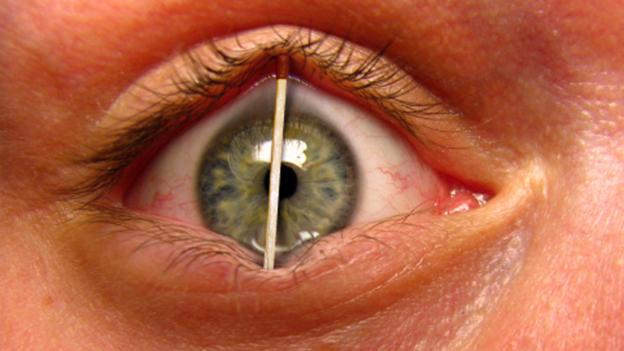
We waste a third of our lives sleeping – or that’s how some people
see it. When there doesn’t seem to be enough hours in the day, you yearn
to be like the former British Prime Minister Margaret Thatcher, who was
said to get by on just four hours sleep a night, or the artist Salvador
Dali who wasted as little time as possible slumbering.
There is a quite a range in the number of hours we like to sleep. As Jim Horne writes in Sleepfaring,
80% of us manage between six and nine hours a night; the other 20%
sleep more or less than this. But how easy is it to change your regular
schedule? If you force yourself to get out of bed a couple of hours
early every day will your body eventually become accustomed to it? Sadly
not.
There is plenty of evidence that a lack of sleep has an
adverse effect. We do not simply adjust to it – in the short-term it
reduces our concentration, and if it’s extreme it makes us confused and
distressed, and turns us into such poor drivers that it’s the equivalent
of being drunk. The long-term effects are even more worrying.
Repeatedly getting less sleep than you need over the course of decades
is associated with an increased risk of obesity, diabetes, high blood pressure and cardiovascular disease.
But
what about those people who do happily appear to manage on fewer hours
than the rest of us? Why does it not seem to make them ill?
Firstly,
you can console yourself with the fact that there are plenty of myths
about people’s bold claims. Napoleon allegedly said that sleep was only
for weaklings, but in fact he got plenty of shut-eye.
But there
are a few very rare individuals who can manage with only five hours
sleep a night without experiencing deleterious effects. They are
sometimes known as the “sleepless elite”.
In 2009, a team led by geneticist Ying-Hui Fu at the University of
California San Francisco discovered a mother and daughter who went to
bed very late, yet were up bright and early every morning. Even when
they had the chance to have a lie-in at the weekend (a tell-tale sign
that you are sleep-deprived) they didn’t take it.
Tests revealed
that both mother and daughter carried a mutation of a gene called hDEC2.
When the researchers tweaked the same gene in mice and in flies, they
found that they also began to sleep less
– and when mice were deprived of sleep they didn’t seem to need as much
sleep in order to catch up again. This demonstrates that genetics play
at least some part in your need for sleep; unfortunately the sleepless
elites’ enviable state of affairs isn’t available to rest of us, because
at the moment we are stuck with the genes we have (that’s my excuse
anyway).
But while it might not be possible to train yourself to sleep less, researchers working with the military
have found that you can bank sleep beforehand if you plan well in
advance. At the Walter Reed Army Institute of Research they had people
go to bed a couple of hours earlier than usual every night for a week.
When they were subsequently deprived of sleep they didn’t suffer as much
as the people who hadn’t had the chance to bank sleep in advance.
This
does involve a lot of effort, so in general what you need to do is work
out your personal sleep requirement and then try to stick to it. In his
book Counting Sheep
Paul Martin describes a method of working this out. You probably need
to do it while you’re on holiday because you need to wake up naturally,
rather than rely on an alarm clock. Every night for two weeks you go to
bed at the same time and see what time you wake up by yourself next
morning. For the first few nights you might well be catching up on
missed sleep, but after that the time you wake up gives an indication of
the length of your ideal night’s sleep.
You might be disappointed to find you need more sleep than you’d hoped,
but don’t see it as a waste. This is time spent valuably allowing your
body and mind to function at their best during waking hours. It may use
up a third of your life, but it makes the other two thirds so much
better. The politician whose sleep patterns inspire me isn’t Margaret
Thatcher, but Winston Churchill. He disliked getting out of bed so much
that he stayed there working all morning, even receiving visitors in his
bedroom. Three more homes for life in the universe? (Posted by Angela Blasi)
April 22, 2013 -- Updated 1417 GMT (2217 HKT)

Editor's note: Meg Urry is the Israel Munson professor of physics and astronomy and chairwoman of the department of physics at Yale University, where she is the director of the Yale Center for Astronomy and Astrophysics.
(CNN) -- Is anybody out there?
For millennia, humans have gazed at the night sky, asking this question. That's why scientists and NASA are eagerly searching for "exoplanets" -- that is, planets that orbit around stars other than our sun.
Last week NASA's Kepler satellite reported the discovery of three Earth-sized exoplanets within the so-called "habitable zone," defined as the neighborhood of a star where liquid water -- essential for life as we know it -- can exist.

Meg Urry
In our solar system, only three planets lie in the sun's habitable zone -- Venus, Earth and Mars.
Planets too close to the star they orbit, like Mercury, are too hot for liquid water. Even Venus turns out to be too hot, thanks to a runaway greenhouse effect caused by its carbon dioxide-rich atmosphere. Planets farther from their star, like Jupiter, are too cold, at least on its surface -- although Europa, one of Jupiter's moons, may have oceans of liquid water beneath an icy crust.
Say hello to the three new exoplanets: Kepler 62e and Kepler 62f orbit are the fifth and sixth planets orbiting the star Kepler 62, and Kepler 69c is the third planet orbiting -- you guessed it -- Kepler 69. All three are nearly the same size as our Earth.
Kepler 62f has a diameter 40% larger than the Earth's. It orbits its star once every 267 days, very similar to the 225-day period of Venus. We do not know what Kepler 62f is made of but other exoplanets of a similar size are known to be rocky, so that's the best guess for now.
Kepler 62e is about 60% larger than the Earth and is probably hotter because it lies at the inner edge of the habitable zone, in a 122-day orbit -- slightly longer than Mercury's 88-day orbit.
You can see a pattern: the shorter the orbital period, the closer the planet is to its star. For physics lovers, this follows directly from Newton's law of gravity -- but that's a lesson for another time.


For now, I can tell you that one Mercury-year is 88 Earth-days, one Venus-year is 225 Earth-days, one Earth-year is 365 days, and one Jupiter year is about 12 Earth-years. (By "year" I mean the time that a planet takes to orbit its star. By "day" I mean the rotation period of the planet. What a "day" or "year" means clearly depends on the planet!)
Since Kepler 62 is a cooler star than our sun, planets can orbit closer to it than the Earth can to our sun before overheating.
In contrast, the third Earth-like planet, Kepler 69c, orbits a star very similar to our sun (that is, hotter than Kepler 62). It is 70% larger than the Earth and orbits Kepler 69 once every 242 days -- very like Venus.
Debra Fischer, noted exoplanet hunter and my colleague at Yale, explained the significance of the discovery: "The radii of these planets makes them the smallest ever detected outside the solar system. The host star is about a billion years older than our Sun, so it is intriguing to speculate about whether life might inhabit these planets."
We know from scientific studies on Earth that, given the right chemical elements and some energy, organic compounds form. Living organisms have been found even in apparently inhospitable regions of the Earth, like the driest deserts or Antarctica, or near thermal vents in the black depths of the ocean. With the right ingredients, it seems, life is nearly impossible to prevent.
We don't know for sure whether there is life on Venus or Mars. If there is, it's unlikely to look like ET, canal-building aliens, or any other science fiction-type fantasy. Walking, talking aliens would have been visible decades ago to telescopes and rovers.
But could there be intelligent life in another planetary system, in orbit around one of the 100 billion other stars in our Milky Way galaxy? Could we communicate with them? Could we visit them?
The Kepler satellite was designed to look for planets around each of about 100,000 stars. As of April 19, 2013, the Jet Propulsion Laboratory's Planet Quest website reports 851 confirmed planets and 2781 candidates, totaling as many as 3,632 exoplanets. Most were discovered by scientists using Kepler data -- and a few were found by ordinary citizens analyzing Kepler data at planethunters.org.
Become a fan of CNNOpinion
Stay up to date on the latest opinion, analysis and conversations through social media. Join us atFacebook/CNNOpinion and follow us @CNNOpinion on Twitter. We welcome your ideas and comments.
We can't travel to the nearest stars in a human lifetime -- such a journey would take tens of thousands of years with current technology. But we do have the technology to speak to distant civilizations. In fact, we've been broadcasting television signals to the cosmos for more than 80 years.
We have had the technology to explore space and to communicate over long distances for less than 100 years -- a tiny fraction of the few million years since the first humans, much less the 4.5 billion years since the Earth formed.
So it is likely that any other technologically sophisticated civilization would be far more advanced than we. That means they probably could let us know they were here, if they wanted to. For now, we can keep sending our TV broadcasts, listening for their broadcasts and studying exoplanets for signs of life.
Thursday, at a meeting of the NASA science advisory committee I serve on, NASA Associate Administrator for Science and astronaut John Grunsfeld finished his presentation by giving us a heads up about the exciting Kepler exoplanet discoveries. As he said in the press release, we are "a bit closer to finding a place like home. It is only a matter of time before we know if the galaxy is home to a multitude of planets like Earth, or if we are a rarity."
After our committee meeting ended today, I asked one of the NASA audio-visual staff whether he had heard about the new exoplanets. "Oh yes," he answered, "the ones in the habitable zone." He asked whether life might exist on one of these planets, and whether we could visit them. Such ideas are why he is thrilled to work at NASA.
People want to learn about life elsewhere in the universe. We want to visit those planets, to see what creatures live there, to compare to our own world -- to learn what is out there.
Thanks to Kepler, NASA, dedicated scientists and curious citizens, we are that much closer to finding out.
Follow us on Twitter @CNNOpinion
Join us on Facebook/CNNOpinion

Subscribe to:
Posts (Atom)